


- Results
- Judges’ Citations
- A Note from Mozhi
- Shortlist
- Longlist
- Rules
Winners
| Prize | Translator | Title | Source language | Author |
| Joint 1st (INR 37,500) | Disha Kapkoti | The New Manager | Hindi- Kumaoni | Anil Karki |
| Joint 1st (INR 37,500) | Madhav Ajjampur | The Door | Kannada | Padmanabh Bhat Shevkar |
| 3rd (INR 15,000) | Taseer Gujral | Salt | Punjabi | Balijit |
*2nd place not awarded since two entries tied for the first prize. The prize monies for the first and second place were split equally between the two winners.
Special Mention:
(The translator wins a special mention prize of INR 5,000 for her exemplary translation)
| Translator | Title | Source language | Author |
| Vasundhara Srinivasan | Even Luck is a Kind of Talent | Tamil | Appadurai Muttulingam |
All prizes are sponsored by The Mozhi Trust.
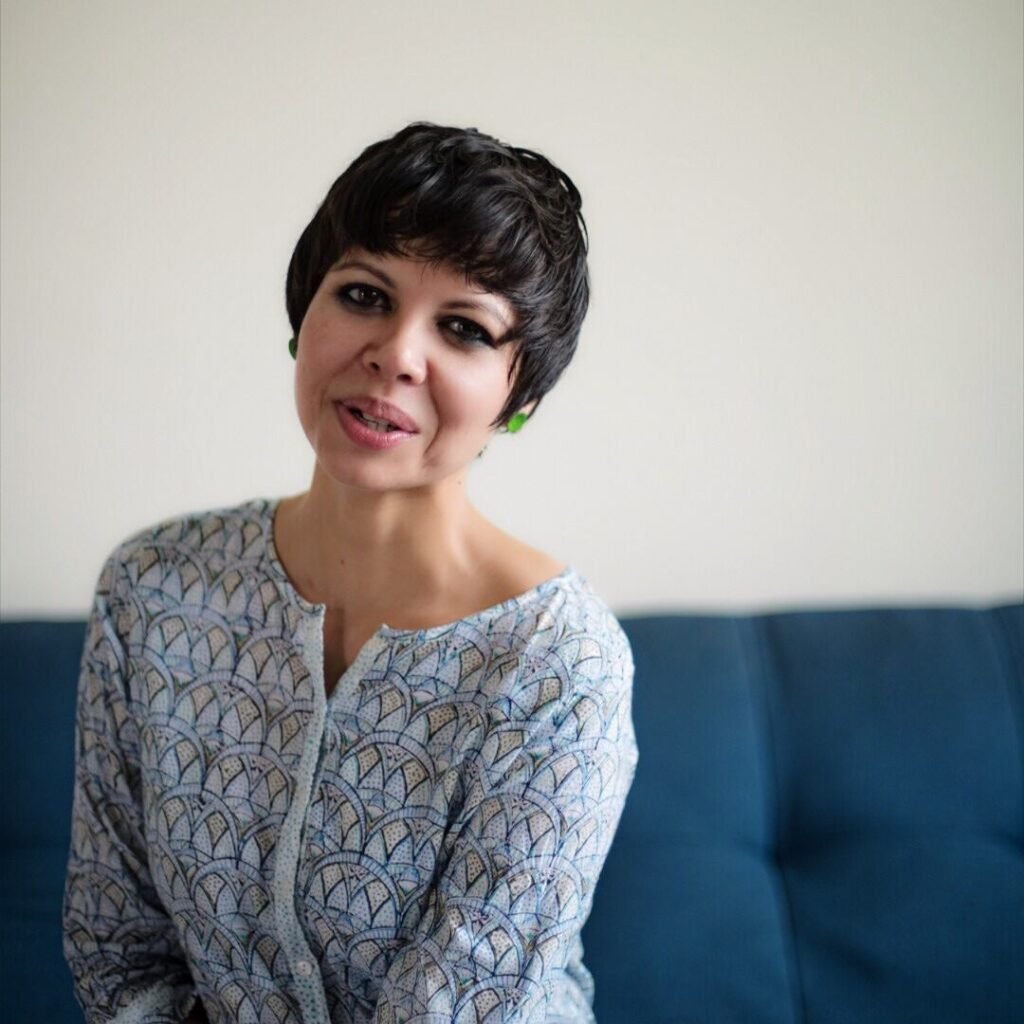
It was a true privilege to serve on the jury for the Mozhi Prize 2025 contest, alongside Abdul Rasheed and Arunava Sinha. The process was an enriching journey of learning and discovery, offering a rare and invigorating glimpse into the vitality, range, and ambition of contemporary short fiction in translation.
What excited me most was the sense of experimentation on display—the willingness of writers and translators to test the elasticity of the short story form while remaining attentive to voice, rhythm, and narrative integrity. In arriving at the prize-winning selection, I was guided by a balance of criteria: sustained readerly engagement, imaginative risk-taking, sensitivity and skill in translation, and, above all, the intrinsic strength and resonance of the story itself.
To be part of a platform that fosters such careful, committed work across languages was both thrilling and humbling. The Mozhi Prize is doing something genuinely vital, and I am honoured to have contributed, in however small a way, to this remarkable endeavour.
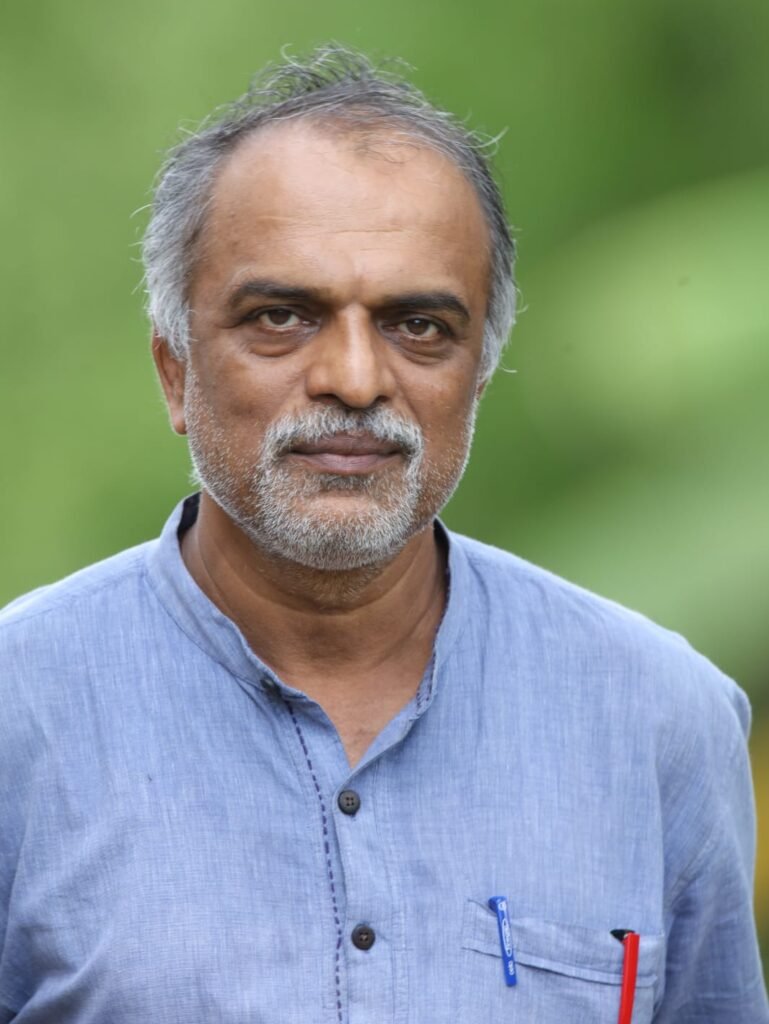
It was a mix of emotions to read through the longlisted eleven short stories from different Indian languages. I was pleased to see the stories breaking free from predictable childhood nostalgia and rigid political correctness. At the same time, it was a little unsettling to notice that even new works by seasoned short story writers seemed influenced by cinematic scripts and digital formulae. I could sense that the immortal joy of plain storytelling was being overtaken by the more mortal thrill of providing twists in the tales.
However, when we came together to choose the best among the stories, it was heartening to find that we were unanimous. We chose robust storytelling. So robust that the thin line between the original language and its translation was rarely visible.
I thank Mozhi for preserving the soul of plain storytelling.

All the entries for the Mozhi Prize opened new windows into writing from the languages of India. The sheer range of stories, styles, themes, settings, characters, and composition were a delightful affirmation of the plurality of Indian literatures—and of the crucial role translators play in making these multiworlds legible to all of us. The winning stories stood out in particular for the writers’ use of fiction as a means to showing us new worlds, and to the courage of the translators in carrying these stories across languages with verve and flair, revealing remarkable talent for inhabiting two languages. The stories that have won this year stretch and widen the scope of fiction, and the translations match their inventiveness and flourish unobtrusively but elegantly.
Since we received far fewer submissions than usual, we have decided not to publish the longlist this year.
Launching: The Mozhi Prize 2025
About the competition:
The Mozhi Prize is a literary fiction translation prize awarded for the translation of short stories from an Indian language into English. Through this prize, we seek to provide a platform for emerging translators with a passion for the craft. We also hope to bring attention to the wealth of literature in Indian languages and the art of fiction translation.
Over its first three editions, the Mozhi Prize has received over 400 submissions from across 18 different source languages. Our impressions on the previous editions are recorded in our notes from the respective years. It gives us immense joy to note that many of our shortlisted translators have gone on to work on book-length projects and win other prestigious awards.
We immensely value the curatorial pursuit of the translator and therefore continue to place emphasis on the aesthetic quality of the story, aside of the quality of the translation. We therefore invite participants to choose stories that are fresh, inventive and questful.
We look forward to reading the submissions!
Who can apply:
- Individuals or a team of not more than two translators can apply. There is no age limit.
- This initiative is aimed at discovering emerging translators and hence we ask that you should have published no more than one book-length translation as of the date of submitting your entry. If you have been published in any other form, or are yet to publish, you are welcome to apply.
- We require the translator to be an Indian tax resident. Unfortunately, we are no longer able to accept translations from others due to administrative constraints with respect to payment of prize monies.
- We request winners of the top three prizes from previous editions of the Mozhi Prize to kindly refrain from participating.
Panel of judges:

Janice Pariat is the author of Boats on Land: A Collection of Short Stories, the novels Seahorse, The Nine Chambered-Heart, and Everything The Light Touches. Originally written in English, her works have been translated into ten languages including Italian, Spanish, French, and German. She was awarded the Young Writer Award from the Sahitya Akademi and the Crossword Book Award for Fiction in 2013. Her novel Everything the Light Touches was included in The New Yorker’s list of Best Books of 2022, and awarded the Auther Award for Best Fiction, the Sushila Devi Award, the Pen and Paper Fiction Award and the Atta Galatta Bangalore Literature Festival Book Prize. In 2014, she was the Charles Wallace Creative Writing Fellow at the University of Kent, UK, and a Writer in Residence at the TOJI Residency in South Korea in 2019. In Fall 2024, Janice was a resident at the Rockefeller Foundation Centre at Bellagio, Italy. Currently, she teaches Creative Writing and Art History at Ashoka University and lives between Shillong and New Delhi with a cat of many names.
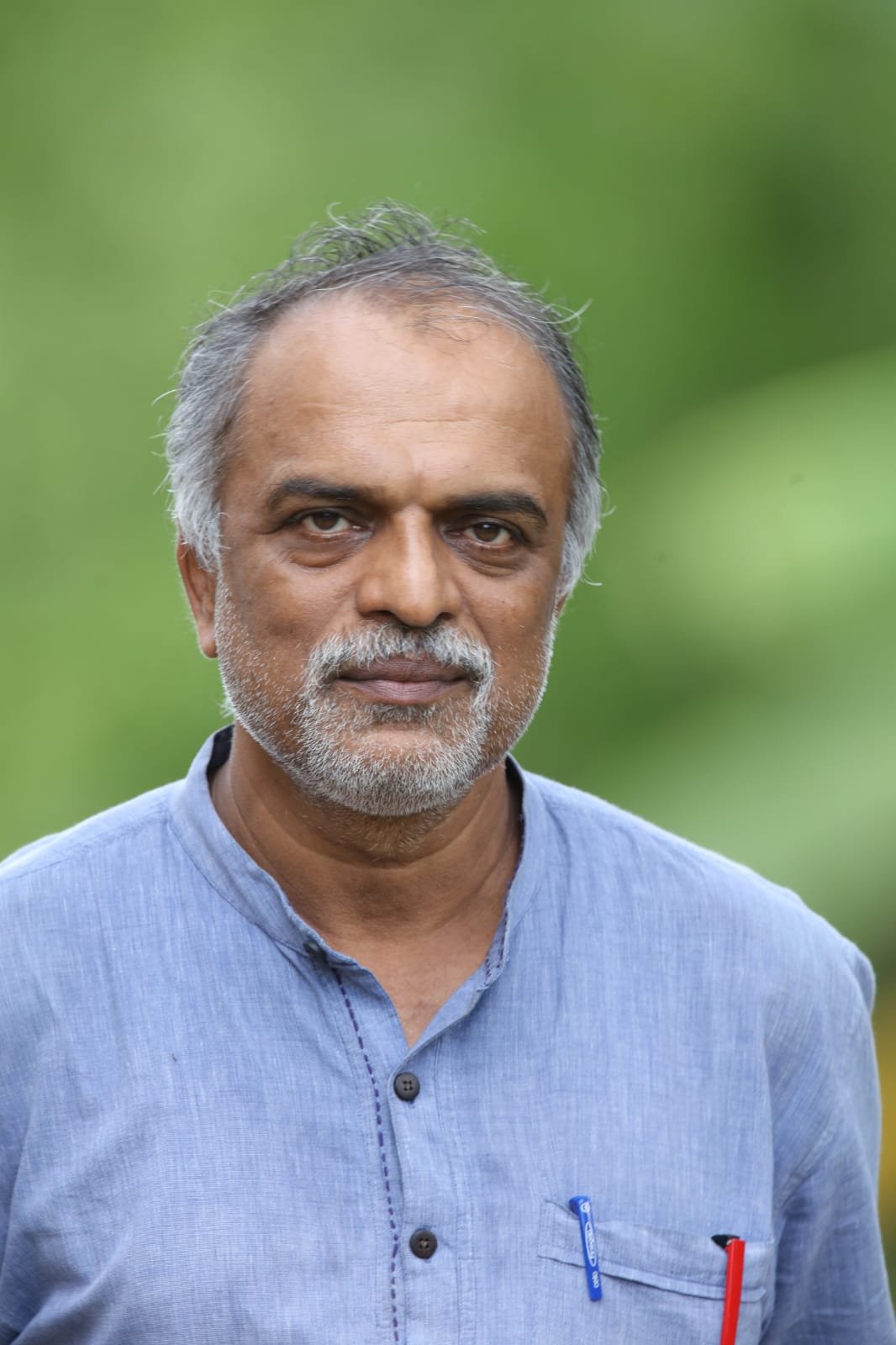
Abdul Rasheed is a versatile writer, poet, editor, translator, and blogger who writes in Kannada. Hailing from Coorg and educated in Mysore, he has had a dynamic career with All India Radio, serving in Mangalore, Shillong, Mysore, Madikeri, Gulbarga, and Lakshadweep. A prolific writer, Rasheed’s fiction and non-fiction are celebrated for their vibrant imagination, poetic style, and use of fresh idioms. His contributions to literature have earned him numerous prestigious accolades, including the Central Sahitya Akademi Golden Jubilee Award, Karnataka Sahitya Akademi Award, B.H. Shridhar Award, Vardhamana Award, and Lankesh Award. His works have been translated into several languages, including English, German, Hindi, and Malayalam, extending his reach beyond Kannada-speaking audiences.Rasheed also serves as the Honorary Editor for the acclaimed online magazine Kendasampige, further cementing his influence in Kannada literary circles. His multifaceted contributions as a writer, editor, and broadcaster have made him a prominent voice in contemporary Indian literature.
Arunava Sinha translates classic, modern and contemporary Bengali fiction and nonfiction into English, and English fiction, non-fiction and poetry into Bengali. He also translates from Hindi into English and Bengali. Ninety-six of his translations have been published so far. Twice the winner of the Crossword translation award, winner of the Muse India translation award, and the winner of the Kalinga Literary Festival Book Award for translation (2025), he has also been shortlisted for The Independent Foreign Fiction prize (2009), the Global Literature in Libraries Initiative Translated YA Book Prize, the 2021 National Translation Award in the USA, the Miles Franklin Literary Award, and The Stella Prize in Australia in 2024. Besides India, his translations have been published in the UK, the US, and Australia in English, and in several European and Asian countries through further translation. He is a professor of the practice in the Creative Writing department at Ashoka University, and Co-Director, Ashoka Centre of Translation.
What to translate:
- Any short story originally published in/after 2000 written in a non-English Indian language.
- The translator needs to have obtained permission from the rights holder to translate and publish the work. Mozhi reserves the first right to publish the translation, on its website, and/or in book form. You may find a sample rights letter here.
- Word count in English up to 7,000 words
- We do not accept self-translations.
- We allow re-translations of works that have already been translated with a justification for why it is being re-translated and what you are looking to do differently.
- Please do not submit excerpts from novels / novellas, we are looking for a self-contained story within the word limit mentioned above.
- Please submit only one story per entrant.
- The translation should not have been published anywhere else.
- The jury’s decisions will be final and binding.
- On grounds of fairness, we will not accept translations of stories written by any of the members on our jury or the founders at Mozhi.
Other information:
- Style: Translation should be as self-contained as possible; please avoid glossaries or footnotes unless absolutely necessary.
- Format of submission: Word document, 12pt, double spaced. Please mention the title of the story, the name of the author and your name on the first page.
- Selection criteria: Since our focus is on encouraging literary translation, the selection criteria will accord significant weightage to the literary/aesthetic quality of the story, apart from the quality of the translation itself.
- Translation rights: We ask that you have obtained the translation rights from the rights holder prior to submission. You will be required to submit a signed rights statement at the time of submission.
- Publication: Mozhi will have the first rights to publish the shortlisted entries digitally and/or in print form.
How to enter:
Please submit here.
Prizes:
1st Prize – INR 50,000
2nd Prize – INR 25,000
3rd Prize – INR 15,000
Prizes sponsored by The Mozhi Trust
Timelines:
Last date for submission: 15 September 2025, 11.59pm IST.
Winners to be announced: 31 December 2025 By Jan 10, 2026
Please write to contact@mozhispaces.in if you have any questions.
We look forward to your entries!
Team Mozhi
Hello, and wish you a happy new year!
After yet another interesting reading period and some intense discussions, we are delighted to announce the results of the Mozhi Prize 2025, our 4th edition.
This year, we received far fewer responses than what has been our usual fare: only 55 entries in all (versus 120 – 200 in previous editions). As a result, we had a shorter longlist than usual. Like all our recent editions, we received entries from a number of unique Indian source languages (13 this year). The largest number of entries were from Hindi and Tamil (10 each), with Kannada, Malayalam and Assamese not far behind. We also received entries from Kashmiri, Manipuri and Punjabi. Even when we had restricted the entries to original stories published between 2000 and 2025, we were pleasantly surprised to note that nearly 50% of all entries were published after 2020. 71% of the entries were from translators under the age of 40.
We wondered why we received fewer submissions than usual. One reason that pops out for us is a crucial change we had made in the rules this time. While the competition was open to emerging translators across the country working to translate short fiction from any Indian language into English, we wanted to read more contemporary short stories. So, we asked that translators choose stories originally published between the years 2000 and 2025 to translate. As always, we had asked that the translator obtain rights to translate the story and publish the translation.
While we underscore the necessity of this process, we also understand the constraint this demand may place on emerging translators. We are thinking about how to fine-tune the format of the contest in coming years.
Going by our usual process, we gave equal weightage to the quality of the translation—particularly looking for translations with creative, inventive solutions to problems posed by the source text—as well as the aesthetic quality of the story selected for translation in coming up with the longlist.
However, this year, we found it hard to locate entries that satisfied us on both counts. With some entries, we found the translation particularly interesting, even if we weren’t completely taken in by the story. With a few others, we loved the nuanced way the story was constructed even if we thought the translation needed more polish.
At Mozhi, we accord equal importance to both aspects with a view to celebrating the role of the translator as a curator and not merely a purveyor of words. It was reassuring to see translators choose stories with emotional depth, fine characters, and detailed world-building such as The Door (Padmanabha Bhat Shevkar) and Salt (Balijit), particularly from writers who are relatively undiscovered in English. We hope to see more such distinctive stories in future editions.
Our longlist was shared with our panel of judges — Janice Pariat, Arunava Sinha and Abdul Rasheed — who scored the entries and came up with a shortlist of 8 stories. After a spirited discussion on the merits of each story, they decided on – for the first time in the history of the Mozhi Prize – a shared first prize between two entries. Consequently, we do not have a second prize this time. In addition to the third prize, the judges also decided on a joint special mention for an entry whose translation stood out for them. You can read more about their experience under the citation tab. We are grateful to the judges for their generous investment of time and effort in the Mozhi Prize. We also thank Uma Shirodkar (Marathi – English translator) for extending a hand in screening the submissions.
And finally, our congratulations to all the winners!! We will publish the winning entries soon. Stay tuned to read the stories and learn more about the authors.
Best,
Suchitra & Priyamvada
Team Mozhi
All prizes are sponsored by The Mozhi Trust.
We are delighted to announce the shortlist for the Mozhi Prize 2025.
This year, we received far fewer responses than what has been our usual fare: only 55 entries in all (versus 120 – 200 in previous editions). The entries were screened by us (Suchitra and Priyamvada) along with Uma Shirodkar (Marathi – English translator) who generously consented to be a guest reader this time.
Together, we came up with a longlist of stories for the judges to read. Since the overall submissions were much lower than previous editions, we are not publishing a longlist this year. However, the longlist was, as it usually turns out for us, the top 25-30% of all submissions.
Our judges — Janice Pariat, Arunava Sinha and Abdul Rasheed — scored the entries and came up with a shortlist of 8 stories. We are delighted to share the shortlist of the Mozhi Prize 2025, in no particular order, below. Congratulations to all the shortlisted translators!
The winners of the Prize will be announced by Jan 10, 2026. Please follow our page and our Twitter (X)/Instagram handle @mozhispaces for updates. Thank you!
The Mozhi Prize 2025 – Shortlist
| Title of the translated story | Source Language | Translator | Author of the original story | Year of publication of the original story |
| The New Manager | Hindi, Kumaoni | Disha Kapkoti | Anil Karki | 2015 |
| Even Luck is a Kind of Talent | Tamil | Vasundhara Srinivasan | A Muttulingam | 2023 |
| Atomic Duck | Hindi | Karthik Venkatesh | Varun Grover | 2019 |
| The Door | Kannada | Madhav Ajjampur | Padmanabh Bhat Shevkar | 2019 |
| Choice(lessness) | Hindi | Areeb Ahmad | Kinshuk Gupta | 2025 |
| Salt | Punjabi | Taseer Gujral | Balijit | 2022 |
| Exorcism | Malayalam | Veena Narayan | Santhosh Eachikkanam | 2025 |
| The Unstruck Melody | Tamil | Vigneshwaran Muralidaran | Senthil Jagannathan | 2023 |